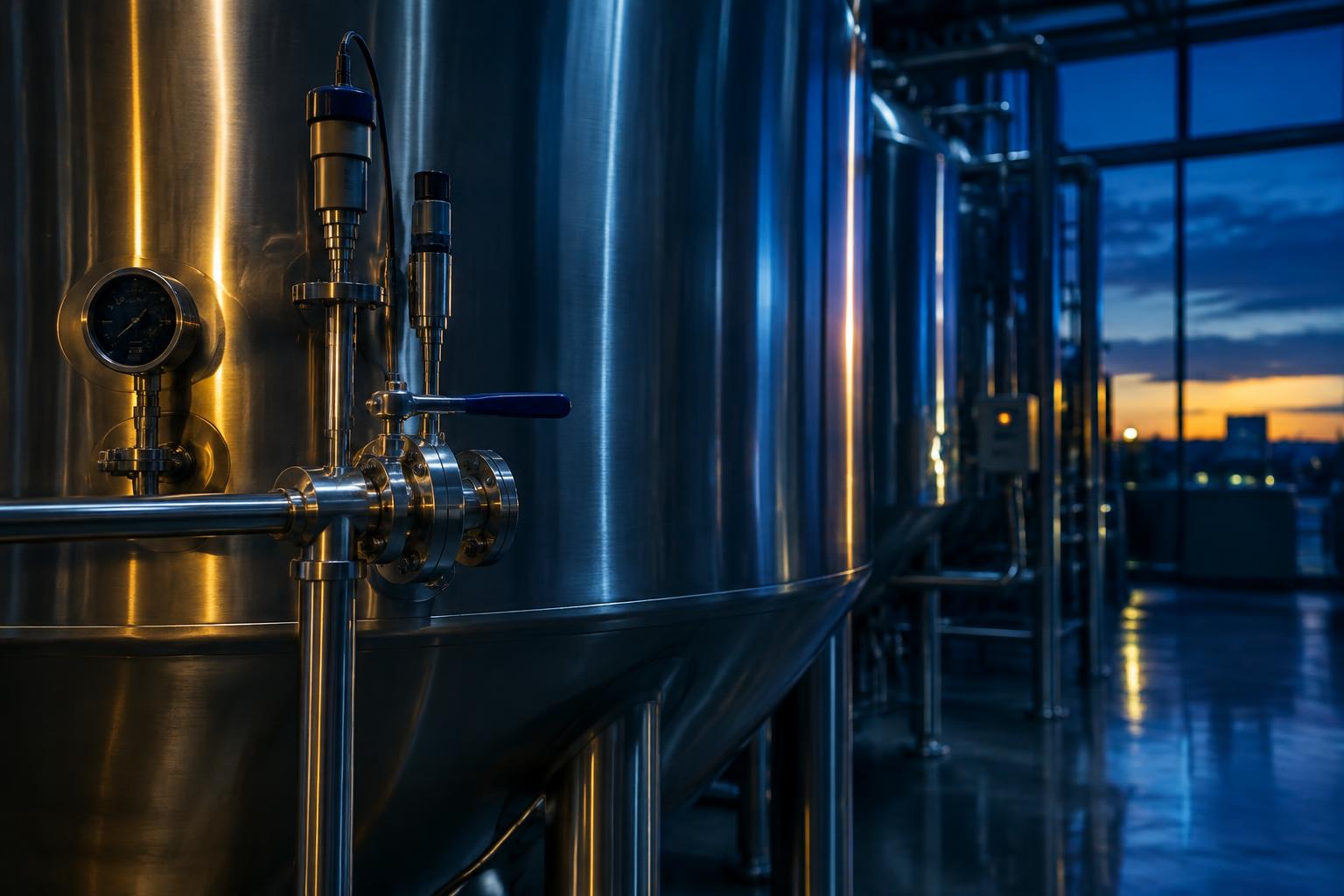
AI for Food Bioprocesses
First 2027 scholarship call
AI for Food Bioprocesses
A fermented batch, told to someone who has never seen a fermenter. The model proposes. The learner neither doses nor releases.
Developed under the new AI Act model · Continuous updates

Edition 2026
200 hours of applied learning
8 academic credits
25 lessons + 6 workshops
Digital campus
Verifiable certificate
550 USD one payment · or 2 × 275 USD (today and after 30 days)
What you'll learn
- Describe a batch without acronyms: tank, feed, time and product.
- Read temperature, acidity and feed, and know why the point is closed by the sample, not the model.
- Tell CCP, process and procedure deviations apart in a food bioprocess.
- Keep the model’s feed increase as a proposal, never an order, with its log entry and status.
- Recognise and withdraw typical failures: chat recipes, entries without measures and disguised proposals.
- Write a sheet that reads without the chat, with the dosing signature left empty.
- Apply the IntellCore AI Act Method™: classify the risk of an AI use case in your field and document it under the AI Act 2026.
Program curriculum
01 — The place
- What AI is and how it reached food bioprocesses
- Tank, feed, time and product
- Three ways to run the batch
- Who loads, who watches, who releases
- Your role
02 — The number that already exists
- Temperature, acidity and feed
- The sample that arrives late
- The four-hour point
- What a deviation would be
03 — Where the model may propose
- What the model asks for
- Why 8 % is not an order
- What is missing
- Log and wait
04 — The tool
- The next hour
- The copy of the tank
- What it does not see
- When the sample comes back
05 — The failure
- The recipe in the chat
- No time, no measure
- The disguised proposal
- What gets withdrawn
06 — The batch record
- From the point to the batch
- What could be changed
- Who releases
- The next-day sheet
07 — IntellCore AI Act Method™ applied to your field
- The EU AI Act 2026: risk levels, prohibited practices and obligations
- Transparency, human oversight and documentation in your professional field
- Classifying and auditing a real AI use case step by step
- Your compliance file: certified with the IntellCore AI Act Method™
Practical application
- · Final project: the batch sheet for lot L-0417, with the data, the 8 % feed proposal, what was not checked and an empty dosing signature, plus the next-day sheet that reads without the chat and is defended in five minutes.
Practical project: Final project: the batch sheet for lot L-0417, with the data, the 8 % feed proposal, what was not checked and an empty dosing signature, plus the next-day sheet that reads without the chat and is defended in five minutes.
Who is this for?
- · Anyone who will read a fermented batch sheet
- · Food, quality and production teams without plant vocabulary
- · Analysts who review model proposals
Requirements
- · No prior plant experience
- · No coding required
- · About 6 hours per week

Meet your instructor
AI for Food Bioprocesses
Chair, AI for Food Bioprocesses
Fed-batch fermentation, probe and lab data, feed proposals and the batch record — the model proposes, the person neither doses nor releases.
Teaches: AI for Food Bioprocesses
Edition 2026
What each week includes
Every week of the program follows the same structure.
- 01
Explainer video per lesson
- 02
Guided reading (6 h)
- 03
IntellCore Labs · ~90 min workshop with data
- 04
Verified real case
- 05
IntellCore Podcast
- 06
IntellCore Radar
- 07
Self-assessment
- 08
Practice and exam (70%, 3 attempts)
- 09
Extended practice (5 h)
- 10
IntellCore AI Act Method™ module applied to your field (30 h)
- 11
Applied final project (30 h)
- 12
6 modules × 23 h + IntellCore AI Act Method™ module 30 h + final assessment 2 h + final project 30 h = 200 h
- 13
Downloadable PDF summary

Verifiable certificate
200 hours · 8 academic credits
Unique verifiable code at intellcore.ai/verify
Student reviews
Reviews are published from verified students only, after the first cohort completes the program. We do not publish testimonials we cannot attribute.